News
SANTHE scientists at centre of new ENABLE project to improve HIV treatment in infants


A new multi-continental research initiative, the ENABLE (Early Neutralising Antibodies in Infants Living with HIV to Enhance their Life) consortium, has launched an ambitious effort to improve treatment outcomes for infants living with HIV through the addition of broadly neutralising antibodies (bNAbs) to standard antiretroviral therapy. Funded by Global Health EDCTP3 and the European Union, the four-year project brings together 21 research institutions across Africa, Europe and the USA. The consortium is co-ordinated by the Servicio Madrileño de Salud (SERMAS) in Madrid, Spain, and marks a major step forward in collaborative efforts to address persistent gaps in early HIV treatment.
Despite advances in paediatric HIV care, significant challenges remain. In sub-Saharan Africa, only about half of infants born with HIV receive early antiretroviral therapy, and more than 10% die within the first year of diagnosis, even when treatment is initiated. In addition, achieving durable viral suppression remains difficult, with only 25–50% of infants reaching undetectable viral levels in routine care. The ENABLE clinical trial, conducted in South Africa, Mozambique and Cameroon, will assess whether adding two broadly neutralising antibodies to standard antiretroviral treatment can improve viral suppression in infants. The study will also investigate key biomarkers associated with immune responses, viral reservoirs and potential remission, as well as how long antibodies persist in the body and the levels required for effective treatment.
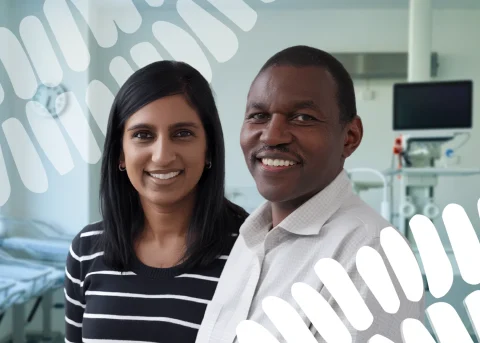
Embedded within the Africa Health Research Institute (AHRI) in Durban, South Africa – under the leadership of Kavidha Reddy, SANTHE Path-to-Independence Awardee, and Thumbi Ndung’u, SANTHE Programme Director – AHRI will coordinate HIV reservoir studies, neutralisation sensitivity assays and immunophenotyping across trial sites, via SANTHE’s capacity-strengthening platforms. Importantly, this work will not only generate critical scientific insights into treatment response and potential remission in infants, but will also strengthen scientific capacity across the continent. The programme includes training opportunities for South African students and staff, the development of MSc and PhD projects embedded within the trial, and South–South collaboration, including training researchers from Cameroon in neutralisation assays.
SANTHE’s involvement ensures that ENABLE is not only a clinical and scientific collaboration, but also a platform for building the next generation of African HIV researchers and expanding locally led expertise in cutting-edge immunological and virological methods.